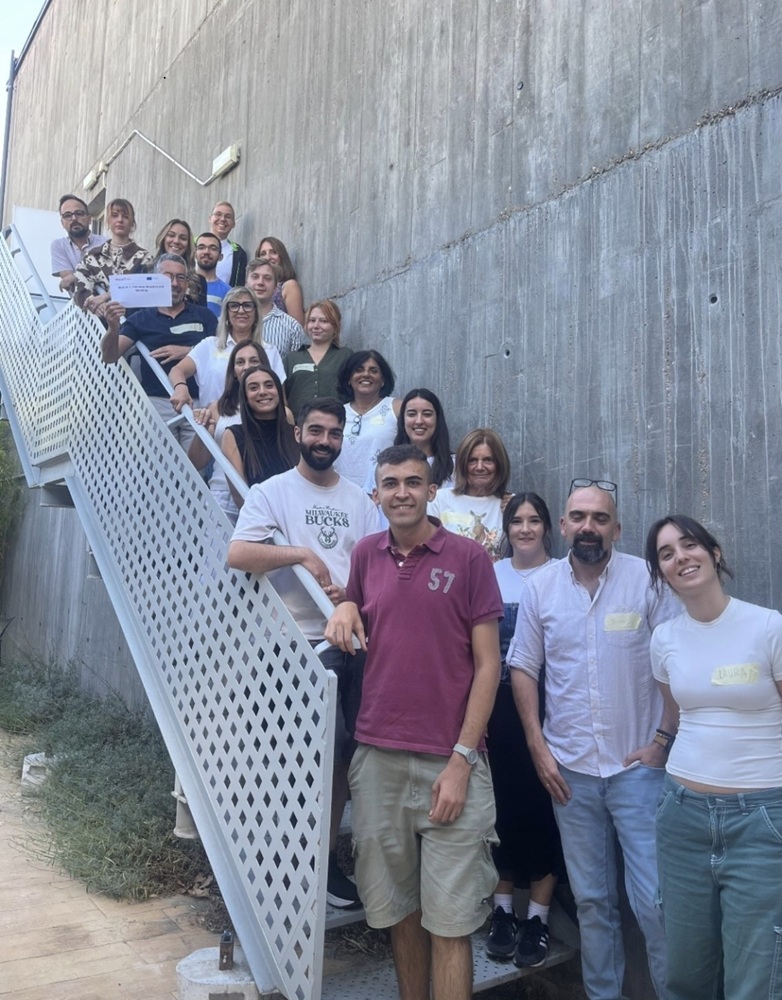
How can organisations working with volunteers be provided with practical tools to help make volunteering more effective, accessible and sustainable? This question was at the heart of the international VolunTrek event held on 23 and 24 September in Valladolid, Spain.
The event brought together organisations working with adult volunteers in different ways across Portugal, Spain, Poland and Serbia. Their diverse experiences and perspectives contributed to testing and improving the Toolkit, one of the key outcomes of the VolunTrek project.
During two days of joint work, participants reviewed the Toolkit developed so far, tested the proposed approaches and activities, and provided concrete suggestions for its further improvement. The particular value of this process lies precisely in the diversity of the participating organisations and their experiences: volunteering was explored from different perspectives and within different national and organisational contexts.
“The aim is not to create yet another handbook that remains merely a collection of theoretical recommendations. The partners want the Toolkit to become a practical, understandable and applicable resource that organisations can use in their everyday work – from creating volunteering opportunities and preparing volunteers to providing ongoing support, guidance and coordination. It has to be practical”, said Jorge Matias, project coordinator.
This is particularly important for smaller organisations and initiatives within local communities. They often have extensive experience, strong motivation and close connections with the people they support, but may not always have sufficient human and organisational resources to develop their own volunteer management systems. A well-designed Toolkit can provide them with concrete methods, guidance and activities that can be adapted to their own needs and capacities.
For Anđela from Serbia, this practical dimension was one of the most valuable aspects of the Valladolid meeting:
“I come from an organisation that does not have large capacities for volunteer management and is still developing in this area. This event meant a lot to us because we learned so much through the exchange with other organisations, but also from the Toolkit itself. Reading it, analysing it and testing it helped me recognise many gaps in our own work and many areas where we can improve. That is why I believe this Toolkit can become a truly useful tool for organisations working with volunteers, especially those that are still developing their capacities.”
Volunteering is more than goodwill
Volunteering is an important expression of solidarity, but also a form of active participation in community life. It brings people together, develops new knowledge and skills, fosters mutual understanding and enables citizens to contribute directly to positive change in their communities.
However, goodwill alone is not enough.
For a volunteering experience to be meaningful and beneficial both for volunteers and for the community, organisations need to be able to prepare volunteers properly, clearly define their roles, provide adequate support and create an environment in which their contribution has purpose and value. This is why investing in the capacities of organisations working with volunteers is also an investment in the development of volunteering itself.
At a time when European societies are facing numerous social challenges, growing needs for support and an increasing need for greater citizen participation in community life, developing quality and accessible models of volunteering is becoming even more important.
VolunTrek therefore sees volunteering not only as an individual act of helping others, but also as a space where solidarity, responsibility, trust, new competences and stronger communities are built.
The event in Valladolid was another step towards this goal – transforming the knowledge and experience of organisations from different European countries into a concrete resource that can also benefit others.
The VolunTrek project is implemented within the Erasmus+ programme and brings together partner organisations from four European countries: Cáritas Portuguesa and Rosto Solidário from Portugal, ASPAYM Castilla y León Juventud from Spain, which hosted the event in Valladolid, Regionalne Centrum Wolontariatu w Kielcach from Poland, and Caritas Serbia.
Through their joint work, the partners are developing knowledge, methodologies and practical tools to help organisations better prepare, engage and support adult volunteers – so that their involvement can have a lasting impact both on the people who volunteer and on the communities they are part of.